
Florida medical
malpractice
lawyer.
- 01What counts as malpractice→
- 02The four elements→
- 03Case types we handle→
- 04Florida presuit requirements→
- 05Deadlines and statute of limitations→
- 06Florida damages caps→
- 07How cases get valued→
- 08Hospital systems we sue→
- 09Case timeline→
- 10Meet your attorney→
- 11Costs and contingency→
- 12Frequently asked questions→
Three questions tell you whether to keep reading.
What counts as malpractice in Florida.
Under Florida § 766.102, malpractice exists when a Florida-licensed provider does what a reasonably prudent provider in their specialty would not have done, or fails to do what one would have done, and that failure injures the patient. A bad outcome on its own is not malpractice. Medicine has known risks; complications occur even when the standard of care is met perfectly.
This is the only place on this site where § 766.102 is fully defined. Every other practice-area page assumes you’ve either read this section or talked to us. The law is the lens through which every claim gets judged.
What you must prove.
Every malpractice claim in Florida, birth injury or pharmacy error, surgical mistake or missed diagnosis, turns on the same four elements. Lose any one and you lose the case.
Eight categories, one standard.
Each category has its own playbook page with the records we review, the evidence patterns that win, and the recoveries that anchor a settlement range. Click through to read the spoke.
Florida presuit requirements.
Florida is one of a handful of states that requires a sworn pre-suit investigation before a malpractice complaint can be filed. This is the single most important procedural feature of Florida malpractice law, and the one that most general-practice firms get wrong by filing first and finding a doctor later. Cases dismissed for lack of a § 766.203 affidavit cannot be re-filed if the statute of limitations has expired.
We obtain the affidavit before we accept your case, not after. Most firms reverse the order, which is how cases get dismissed when the medicine ultimately doesn’t support the claim.
The clock is already running.
Every Florida malpractice claim has at least three different deadlines stacked on top of each other. Miss any one and the case is over. Records also degrade fast, fetal monitor strips, anesthesia logs, audit trails, most systems retain only 90 days by default.
Florida damages caps.
Caps may apply only in voluntary arbitration ($250,000 per claimant under § 766.207, and only if the defendant agrees to arbitrate). No general non-economic cap is currently enforceable in Florida medical malpractice. A new statutory cap in the $200,000 to $300,000 range is being litigated but has not been decided. We argue the cap question on every case.
Current as of April 2026. Florida malpractice damages caps are actively litigated, and Florida Supreme Court rulings change this analysis. We confirm the current state of the law on every case at intake.
- ×Pain and suffering
- ×Mental anguish
- ×Loss of consortium
- ×Loss of enjoyment of life
Capped at $250,000 per claimant only if the defendant agrees to voluntary arbitration under § 766.207. Otherwise no general cap is currently enforceable.
- +Lifetime medical care
- +Past and future lost wages
- +Future life-care plan costs
- +Home modifications, equipment
- +Out-of-pocket medical expenses
Economic damages are uncapped: lifetime medical care, lost earnings, future care needs, and the value of services the patient provided their family (childcare, household support, caregiving). On a catastrophic case, the economic recovery is almost always the larger figure.
The math behind the number.
A malpractice recovery is built bottom-up, not negotiated top-down. A board-certified life-care planner projects what the injured patient will need over a lifetime, an economist reduces those future costs to present value, and a vocational expert calculates lost earning capacity. Non-economic damages are added on top of that economic spine.
Who we sue.
The private health systems we most often see across the table. Each runs a different defense playbook, and which one is opposing changes the case from day one. We do not accept cases against VA, military, county, or public hospital districts due to federal sovereign immunity and § 768.28 statutory caps.
From call to verdict.
Most accepted cases resolve in 18 to 36 months. Some run shorter (admitted-liability matters), some run longer (contested birth-injury claims with multiple defendants). The arc is consistent.
32 years. One question.
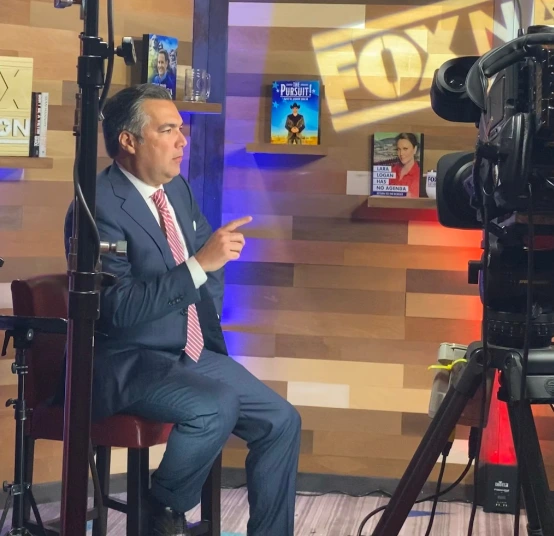
When a hospital harms someone you love, the people who know what happened stop talking. Charts get amended. Nurses leave the unit. The hospital’s lawyers move first. For 32 years, Percy Martinez has been the lawyer Florida families call to get the records, the witnesses, and the answers the hospital does not want them to have.
That’s why we accept an estimated 1 in 10 inquiries. Florida § 766.203 requires a sworn physician affidavit before any malpractice case can proceed. We get one before we file, not after. If the medicine doesn’t support the claim, we tell you straight. If it does, we go to war for you.
No fee unless we win.
We work on contingency. We front every cost, expert witnesses, depositions, court reporters, trial preparation. If we don’t recover, you owe us zero.
Eighteen of the questions we hear most.
Specialty-specific questions live on each spoke page. These cover the law, the procedure, and the economics across all eight categories.
Ask your own question →01What is medical malpractice under Florida law?
Florida § 766.102 defines medical malpractice as a breach of the prevailing professional standard of care by a health-care provider that causes injury to a patient. The “prevailing professional standard” is what a reasonably prudent similar provider would have done under similar circumstances. A bad outcome alone is not malpractice, there must be a breach.
02How do I know if I have a case?
You don’t. That’s our job. The threshold question is whether a board-certified physician in the relevant specialty will sign a sworn § 766.203 affidavit attesting that the standard of care was breached and caused the harm. Of the inquiries we receive, an estimated one in ten clears that bar. Tell us what happened and we’ll find out.
03How much does it cost to hire you?
Nothing upfront. We work on contingency: 33⅓% of recovery before a lawsuit is filed, 40% after. If we don’t recover, you owe us zero.
We front the full cost of expert witnesses, depositions, court reporters, and trial preparation, typically $75,000 to $250,000 on a complex case.
04How long do I have to file a malpractice claim in Florida?
Two years from the date of incident or from when you reasonably should have discovered the harm, whichever is later. The absolute statute of repose is four years.
Birth-injury claims involving a child extend to the child’s eighth birthday. Sovereign-immunity claims against state-employed providers require notice within three years under § 768.28(6).
05What are the damages caps in Florida medical malpractice?
Caps may apply only in voluntary arbitration ($250,000 per claimant under § 766.207, and only if the defendant agrees to arbitrate). No general non-economic cap is currently enforceable in Florida medical malpractice.
A new statutory cap in the $200,000 to $300,000 range is being litigated but has not been decided. Economic damages, lifetime medical care, lost earnings, future care needs, and the value of services the patient provided their family, are uncapped. We argue the cap question on every case.
06What is the §766.203 affidavit and why does it matter?
Section 766.203 of the Florida statutes requires that, before any malpractice case can be filed, a board-certified physician in the relevant specialty must sign a sworn affidavit stating there are reasonable grounds to believe the standard of care was breached. We obtain the affidavit before we file, not after. Most firms file first and find a doctor later, that’s how cases get dismissed.
07What happens during the 90-day presuit window?
After § 766.106 notice is served, both sides have 90 days to investigate informally. The defendants must respond with one of three positions: rejection, offer to admit liability and arbitrate damages, or offer to settle.
Most cases that resolve quickly resolve in this window. The clock on the statute of limitations is tolled during presuit.
08Do you handle cases against public, VA, or military hospitals?
No. Public hospital districts, the VA, military hospitals, and county facilities are protected by sovereign immunity. Federal sovereign immunity governs VA and military cases; Florida § 768.28 caps damages against state and local public defendants at $200,000 per claimant absent a legislative claims bill.
The economics do not work for the catastrophic cases we accept. If your case is against a public defendant, we will tell you on the first call and refer you to a firm that handles them.
09Will my case go to trial?
Probably not. Most cases settle during discovery or mediation, and that is the goal: maximize value, then resolve.
What drives settlement value up is the firm’s willingness to take cases to verdict, paired with the § 766.203 pre-acceptance physician screening. Across the Florida medical malpractice cases this firm accepted and resolved between 2015 and 2026, we have obtained a recovery for every client we represented. Past results do not guarantee a similar outcome in your case.
10What records do I need before I call you?
None. We obtain records under HIPAA, even if you have nothing in hand. If you do have records, photographs, voicemails from the provider, or insurance correspondence, bring them, but don’t delay calling because you’re still gathering paperwork.
11Can I sue a doctor for a bad outcome that wasn’t their fault?
No. Medicine has known complications and bad outcomes happen even when the standard of care is met. That’s why the four elements exist: duty, breach, causation, damages.
Without breach, there is no case, regardless of how devastating the outcome.
12What if I signed an informed-consent form?
Informed consent waives only the known, disclosed risks of a procedure performed correctly. It does not waive your right to sue if the provider performed below the standard of care. A consent form is rarely a complete defense.
13Do you handle cases involving AI-driven diagnostic tools?
Yes. We accept these cases when the facts support them. The legal theory is traditional malpractice against the physician (their reliance on a model output as a deviation from the standard of care) and, where appropriate, a product-liability theory against the AI vendor. The work turns on audit logs, override records, and timing.
14What is wrongful death in the medical context?
A wrongful-death malpractice claim under § 768.21 is brought by the estate on behalf of statutory survivors, typically spouse, children, parents. The damages framework differs from a personal-injury claim: lost support and services, loss of companionship, and the survivors’ mental pain and suffering.
15Will you talk to me even if I’m not sure I have a case?
Yes. The first call is free, confidential, and unhurried. Most callers don’t know whether they have a case, that’s what the call is for. We’ll either tell you we want to pull records, or we’ll tell you why we don’t think it’s a malpractice claim and route you to the right kind of help.
16Do you only handle catastrophic-injury malpractice?
Yes. The economics of malpractice litigation in Florida, expert costs, multi-year timelines, make smaller cases unworkable for any firm willing to be honest about it. We accept cases involving permanent disability, major lifetime-care needs, or wrongful death.
17How does Florida compare to other states for malpractice?
Harder. Florida’s presuit requirements, the 2025 cap, sovereign-immunity rules, and a defense bar funded by some of the largest hospital systems in the country make Florida one of the more challenging states to bring a malpractice claim. That’s why specialization matters.
18What languages do you practice in?
English and Spanish. Our intake team is fully bilingual; trial work can be conducted in either language with a court interpreter when needed. Hablamos español.
Tell us what happened.
A 15-minute call with our intake attorney. We’ll review the records and tell you candidly whether, and how, to move forward.
 English
 Spanish